
Isle of Man Population 2025
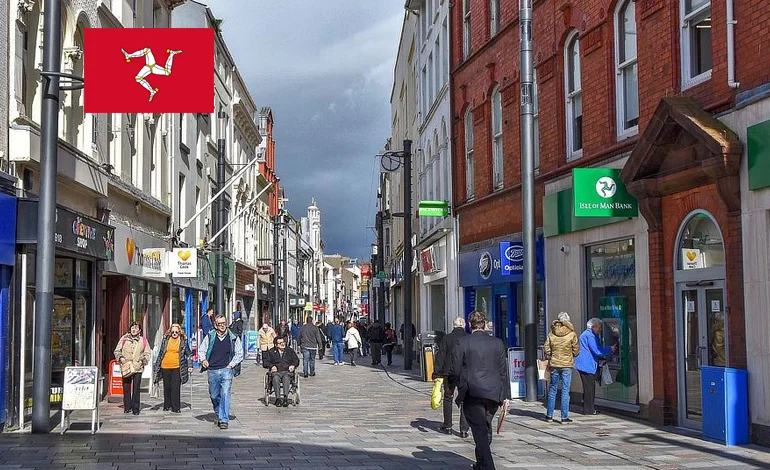
As of 5 November 2025, the Isle of Man’s population is 84,160, projected to reach approximately 84,532 by the end of 2025.
The Isle of Man is located in the Irish Sea between England to the east and Ireland to the west. It is a self-governing British Crown Dependency, but the UK manages defence and foreign relations.
Key Facts About the Isle of Man
- The Isle of Man is not part of the United Kingdom or the European Union.
- The Isle of Man is owned directly by the Crown of King Charles III in 2025, who is called the ‘Lord of Mann‘.
- The island prints its own stamps and coins.
- Major industries are finance, e-gaming, insurance, manufacturing, and tourism.
- The currency is the Manx pound (IMP), which is equivalent to the British pound.
- The Isle of Man has the world’s oldest parliament, called Tynwald, with a history dating back over 1,000 years.
- The country is recognized as the world’s first entire nation UNESCO Biosphere Reserve.
- The Isle of Man’s annual TT motorcycle races are famous around the world.
Isle of Man population growth (1970 – 2025)
| Year | Population | Growth rate |
| 2025 | 84,118 | -0.05% |
| 2024 | 84,160 | -0.01% |
| 2023 | 84,165 | 0.04% |
| 2022 | 84,132 | 0.04% |
| 2020 | 84,064 | 0.11% |
| 2015 | 83,593 | -0.07% |
| 2010 | 83,873 | 1.07% |
| 2005 | 79,516 | 1% |
| 2000 | 75,659 | 1.13% |
| 1995 | 71,513 | 0.74% |
| 1990 | 68,916 | 1.36% |
| 1985 | 64,401 | 0.1% |
| 1980 | 64,076 | 1.34% |
| 1975 | 59,959 | 1.63% |
| 1970 | 55,300 | N/A |
Isle of Man population density
In 2025, the population density of the Isle of Man is approximately 148/km2 (383.3/sq mi).
The population density has grown steadily over the decades, increasing from around 111/km2 in 1980 to its current level in 2025.
This is because gradual population growth is influenced mainly by migration and a rising urban population. Due to that, the Isle of Man is moderately dense compared to other small territories in Europe. The population is not evenly distributed across the island.
Over half of the residents live in urban areas, with Douglas as the largest town and capital. In contrast, the island’s central uplands and rural regions have a much lower density. Knowing the population density helps you in understanding issues like housing, infrastructure, and resource planning on the island.
Isle of Man population by age
In the Isle of Man, the largest single group is people aged 65 and over.
| Age Group | Percent (2025) |
| 0-4 years | 4.1% |
| 5-12 years | 7.5% |
| 13-17 years | 5.7% |
| 18-24 years | 7.5% |
| 25-34 years | 10.7% |
| 35-44 years | 11.9% |
| 45-54 years | 13.6% |
| 55-64 years | 15.4% |
| 65+ years | 23.6% |
The Isle of Man population by age in 2025 shows a diverse mix of residents, with clear trends toward an aging population. Young children aged 0-4 years make up about 4.1% of the total population, while school-aged children and teenagers (5-17 years) represent around 13.2%. Adults aged 18-34 for about 18.2%, reflecting a stable young adult demographic that helps support the workforce and economy.
The largest age groups on the Isle of Man are adults and seniors. People aged 35-54 years form about 25.5% of the population, while those between 55 and 64 account for 15.4%. The senior population—meaning those aged 65 and over—is the biggest segment, making up approximately 23.6% of all residents. This shows the Isle of Man has an older population structure compared to many other places, with a median age around 46.1 years.
Migration trends have an ongoing, but modest, effect on the age profile. While the average age of new residents is often slightly lower than those who leave, the overall structure is largely shaped by the long-term patterns of births and deaths. Historically, significant inward migration in the 1980s and 1990s, especially for the finance industry, helped create the current, older age profile as that group has aged in place.
Isle of Man population by religion
According to the CIA religious population statistics for the Isle of Man, 54.7% of residents are Christian, while 43.8% are non-religious.
Islam: 0.5%, Buddhism: 0.5%, Hinduism: 0.4%, Judaism: 0.2%
Christianity has been a prime part of the island’s long history and cultural traditions. Most residents identify with Christianity, including Anglican, Methodist, Catholic, and other denominations. The island has many active churches and Christian communities, and religious festivals like Easter and Christmas are important events for families and the public.
Minority religions are present but make up a very small proportion of the population. There are a few residents who identify as Muslim, Hindu, Jewish, or Buddhist, but their numbers are not large enough to form distinct communities or places of worship on the island.
Many people, especially among the younger generation, also choose to identify with no religion or describe themselves as spiritual but not religious, a trend that mirrors many Western countries.
Isle of Man 🇮🇲 population by race
The Isle of Man’s racial demographic is approximately 94.7% White of the total population of 2025, while 3.1% Asian, 1.0% Mixed, and 0.6% Black.
The Isle of Man population by race is mostly made up of people with Manx and British heritage. The largest group is White, which includes Manx natives, as well as people of English, Irish, Scottish, and Welsh descent.
The cultural history and family roots of most Isle of Man residents come from these groups, which shape the community, traditions, and everyday life.
Other racial groups are present but form much smaller proportions of the total population. There are small numbers of Asian, Black, and mixed-race residents, many of whom have moved to the island for work, study, or family reasons.
Diversity has increased over the years as people from different backgrounds settle in the Isle of Man, which has helped bring new perspectives and cultures to the community. However, the population by race remains less varied than in larger cities elsewhere in the UK.
Isle of Man Economy and GDP
By the end of 2025, the economy of the Isle of Man is projected to have a GDP of approximately US$7.93 billion.
The Isle of Man is known for its low-tax environment. As of the 2021/2022 National Income Report, the island’s total GDP was approximately £5.35 billion. There is no capital gains tax, inheritance tax, or stamp duty, and the maximum income tax rate is 22%. Corporate tax rates are also very low; with the exception of banking and some retail sectors, most businesses pay zero percent tax.
Its economic strength comes from a balanced and diverse structure. The economy has historically transitioned from one based on agriculture and fishing to one dominated by modern services.
Trade with the United Kingdom remains important, with service exports and imports making up a growing share of cross-border trade. The Isle of Man has built its prosperity on key sectors such as financial services, e-gaming (online gambling), insurance, ICT (information and communications technology), and manufacturing. These industries have made the island an attractive destination for international trade and investment.
What are the bad things about the Isle of Man?
The Isle of Man’s major downside is its isolation and the difficulty of travel, with expensive and sometimes unreliable flights and ferries, especially during winter.
Other drawbacks are high cost of living, including housing, shops, restaurants, utilities and cultural activities, and problems with government inefficiency, healthcare and infrastructure.
What is the Isle of Man famous for?
The Isle of Man is famous for several unique attractions, such as its culture, history, motorsports, and wildlife, that draw visitors from around the world.
The Isle of Man is renowned for its unique political status as a self-governing British Crown Dependency, the world’s oldest continuously existing parliament (Tynwald), the dangerous and prestigious TT (Tourist Trophy) motorcycle races, and its rugged natural scenery. It is also known for its tailless Manx cats, four-horned Manx Loaghtan sheep, Celtic heritage, and unique culture and tax policies.
How big is the Isle of Man?
The Isle of Man has an area of 227 square miles (572 km). It is 33 miles (53 km) long and at its widest point is 13 miles (22 km) wide.
Is the Isle of Man a country?
No, the Isle of Man is not a country; It is a self-governing British Crown Dependency with its own government and laws, constituted by a Parliament that is over 1,000 years old.
The islands are not part of the United Kingdom, but are committed to its external relations and defence. King Charles III is the head of state as Lord of Mann, represented by a Lieutenant Governor.
What is the Isle of Man GDP?
According to reports for the 2022/23 financial year, the Isle of Man’s gross domestic product (GDP) was £5.8 billion, with growth projected to be 3% in 2025.
What is the Isle of Man Currency?
The official currency of the Isle of Man is the Manx Pound, symbolized as £. The Manx Pound is valued at a 1:1 ratio with the GBP, meaning it has the same value and essentially the same purchasing power. The IMP is divided into 100 pence. Isle of Man banknotes are issued in denominations of £1, £5, £10, £20 and £50, while coins are issued in denominations of 1p, 2p, 5p, 10p, 20p, 50p, up to £1, £2, £5. All these banknotes and coins have unique prints that represent the culture, places, and symbols of the area.
Manx Pound notes and coins are not accepted as legal tender in the United Kingdom or elsewhere in the world, so tourists must exchange currency before leaving the island.
Where is the Isle of Man?
The Isle of Man (IOM) is an island located in the middle of the northern Irish Sea, roughly equidistant from England to the east, Northern Ireland to the west, Scotland to the north, and Wales to the south.